The WEKID™ Book Series
What actually constitutes intelligence — and how should it be governed?
Artificial intelligence is now a decision-making infrastructure. It diagnoses patients, approves loans, drafts legal arguments, and shapes policy. Yet most discussions about AI focus on model performance, data scale, and technical optimization — while ignoring a more fundamental question.
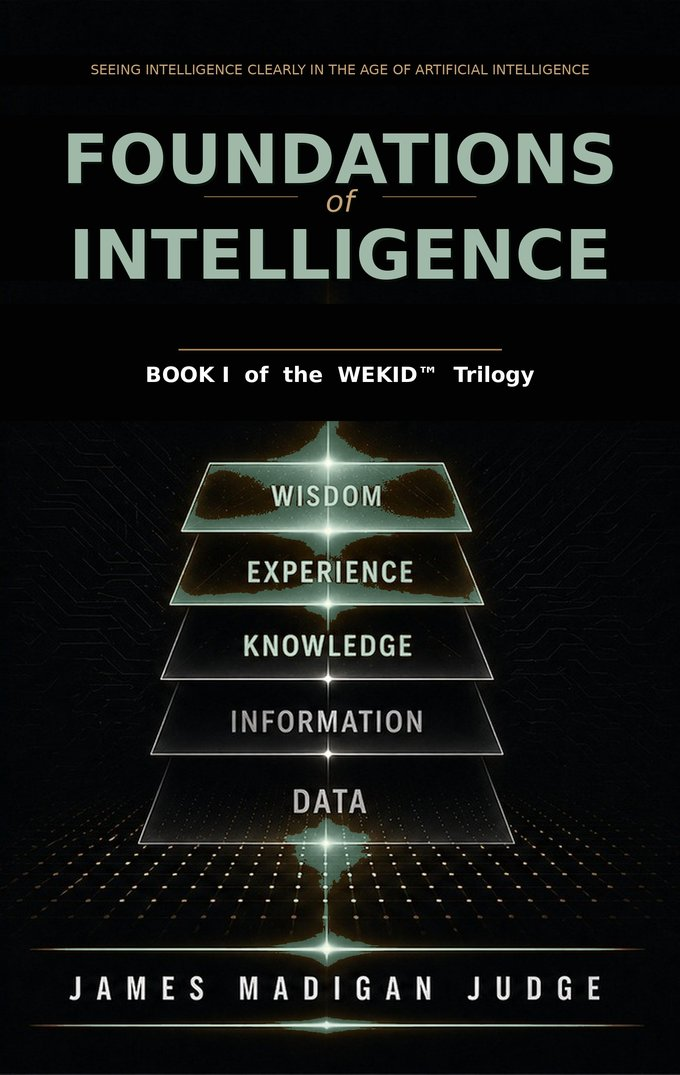
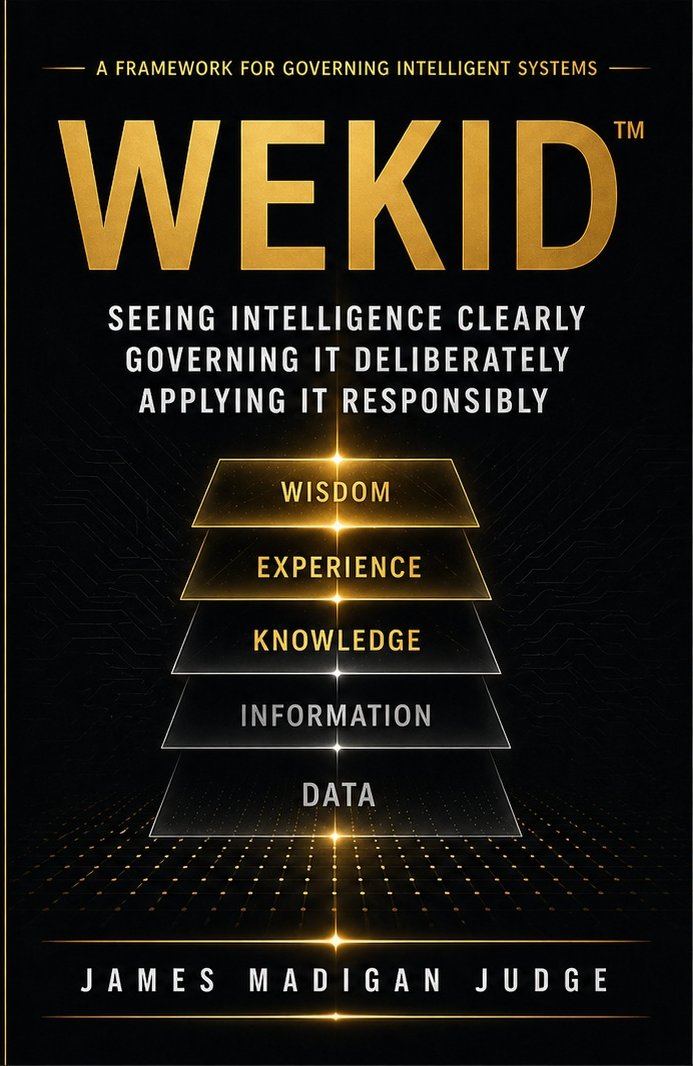
WEKID answers that question with a structured framework for understanding and governing intelligence across human and artificial systems. It organizes intelligence into five epistemic layers: Wisdom → Experience → Knowledge → Information → Data.
Together, these layers form the WEKID model — a hierarchy for understanding how intelligence emerges, how authority should be allocated, and how responsible governance can be maintained in systems increasingly shaped by AI.
★ Recommended Edition
WEKID: Seeing Intelligence Clearly, Governing It Deliberately, and Applying It Responsibly The Complete Trilogy — Definitive Single-Volume Edition
The definitive, single-volume edition. Combines all three books into one continuous work and adds substantial new content that turns the framework from concept into operational system.
WEKID Scoring and Gating Framework
A scoring scale, weighted aggregation formula, and hard gates that convert WEKID from an analytical lens into a repeatable, auditable evaluation framework for AI outputs.
Implementation Architecture & System Design
A reference architecture for governed intelligence, including the deterministic treatment of each layer that distinguishes WEKID from conventional AI evaluation.
Real-World AI Failures & WEKID Mitigations
Twelve documented patterns of AI failure — fabricated legal citations, biased credit decisions, runaway autonomous agents — each mapped to the layer where it originates and the gate that would have prevented it.
The recommended starting point for executives, architects, governance leaders, and policy professionals who want both the conceptual foundation and the operational mechanics in one place.
the individual volumes
Or take the trilogy one book at a time
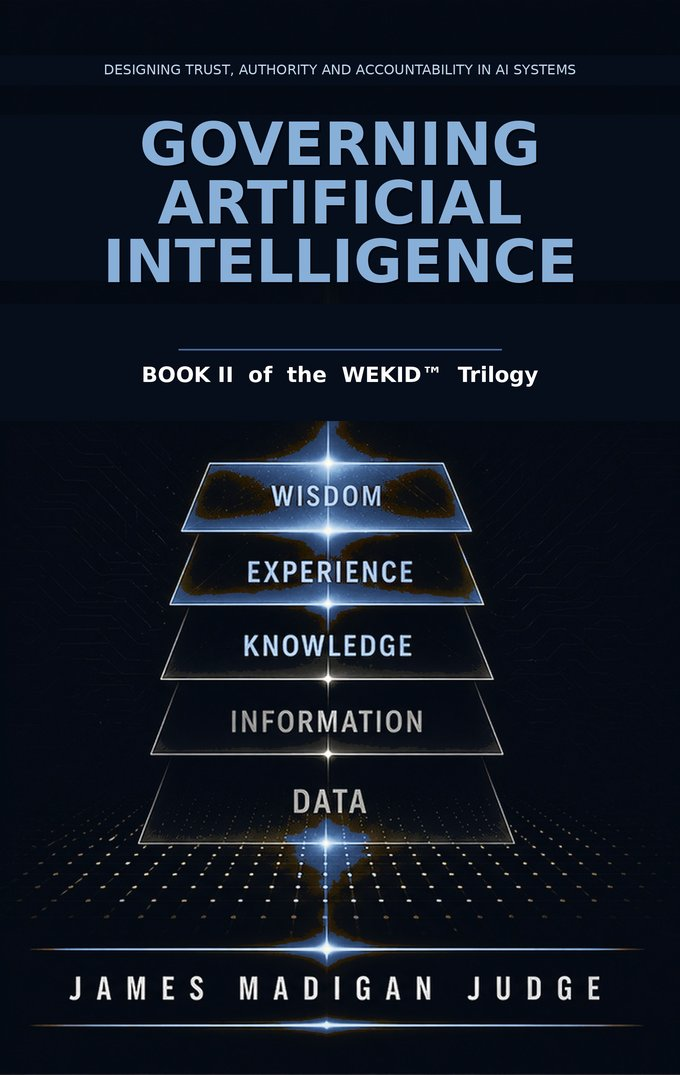
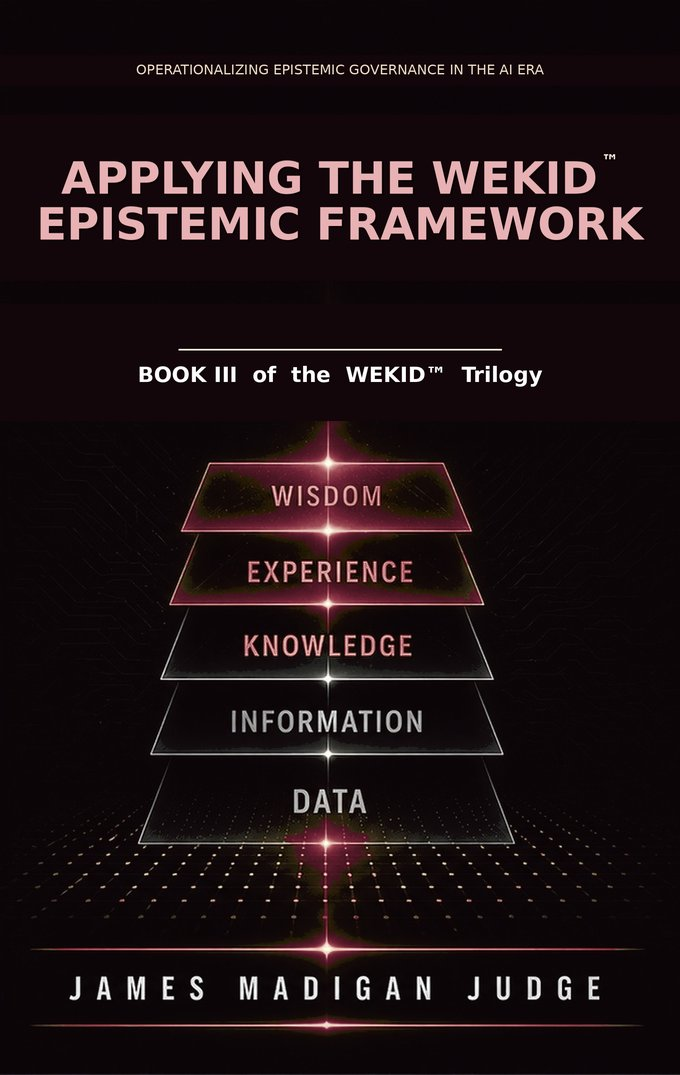
Each volume plays a distinct role in helping readers understand, govern, and apply WEKID in consequential environments.
together they provide
A structured approach for seeing intelligence clearly, governing it deliberately, and applying it responsibly in the age of artificial systems
The books are the intellectual front door. The solutions are how the thinking becomes governance, operating discipline, and practical implementation.